
Key Takeaway
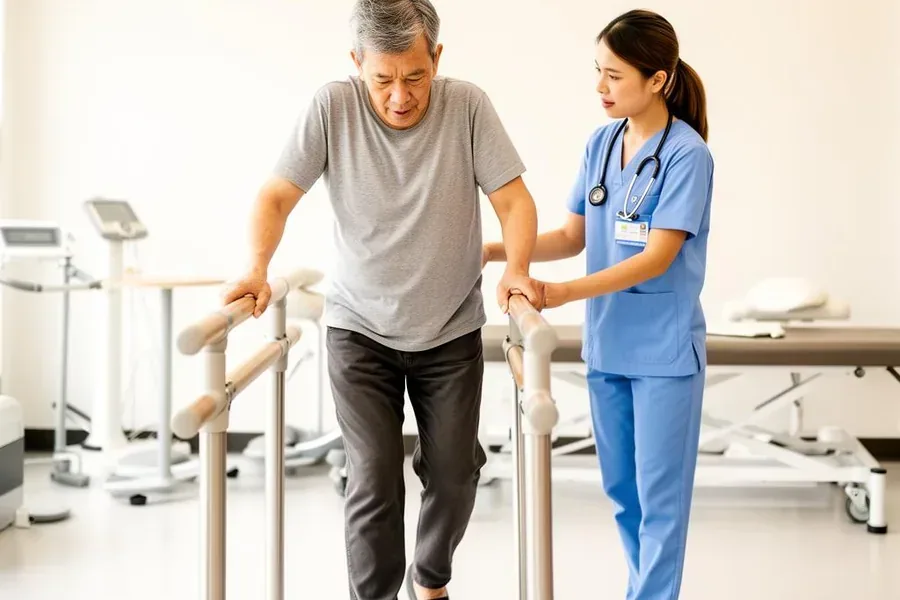
Start intensive rehabilitation as early as possible. The first 3–6 months after stroke (the "Golden Period") offer 60–80% of your total recovery potential. Every week of delay reduces neuroplastic capacity by approximately 5–10%. Patients who receive 2–3 therapy sessions per day during this window achieve significantly better outcomes than those who receive standard 1-session care.
1. What Is the Golden Period?
The "Golden Period" refers to the first 3 to 6 months after a stroke, during which the brain exhibits its highest level of neuroplasticity — the ability to reorganize, form new neural connections, and reassign functions from damaged areas to healthy ones.
This concept is well-established in neuroscience and supported by landmark studies including the AVERT III Trial (Bernhardt et al., 2015) and AHA/ASA Clinical Guidelines (2016). During this window, the brain is essentially in a heightened state of learning — more responsive to therapeutic input than at any other time.
3–6 months
Peak neuroplasticity window
60–80%
Of total recovery happens here
5–10%
Recovery lost per week of delay
💡 Think of it this way: After a stroke, the brain opens a biological "window of opportunity." Just as a broken bone heals fastest when properly set immediately, the brain recovers best when intensively stimulated during this critical period. The window doesn't close completely after 6 months — but it narrows significantly.
2. The Science: How Neuroplasticity Works After Stroke
When a stroke damages brain tissue, the surrounding healthy neurons undergo a cascade of biological changes that make them exceptionally receptive to new learning. Understanding these mechanisms explains why timing matters:
1Axonal Sprouting
Surviving neurons grow new axonal branches toward denervated areas, physically rewiring the brain's circuitry. This process peaks at 1–3 months post-stroke.
📖 Source: Murphy & Bhatt, 2019
2Synaptogenesis
New synapses (connections between neurons) form at an accelerated rate. The brain creates alternative pathways to bypass damaged regions, enabling functions to be "rerouted."
📖 Source: Carmichael, 2016
3Unmasking of Latent Pathways
Pre-existing but dormant neural pathways become active. The brain recruits backup circuits that were previously inactive, restoring function through alternative routes.
📖 Source: Bernhardt et al., 2017
4Growth Factor Expression
Brain-Derived Neurotrophic Factor (BDNF) and other growth factors surge after stroke, creating a biochemical environment that supports new learning. Physical therapy further increases BDNF production.
📖 Source: Ploughman et al., 2009
🔬 The bottom line: The brain is not static. After stroke, it actively tries to repair itself — but it needs the right stimulation at the right time. Intensive physical therapy provides the structured, repetitive input the brain needs to maximize these natural recovery mechanisms.
3. Recovery Timeline: What Happens Month by Month
Acute Phase: Stabilization
- Medical stabilization in hospital
- Early mobilization begins (24–48 hrs if stable)
- Initial assessment and goal setting
- Swallowing and communication screening
⏱️ AHA/ASA recommends rehabilitation assessment within 24–48 hours of admission
Foundation Phase: Rapid Early Gains
- Most dramatic improvements occur here
- Basic mobility: sitting, standing, first steps
- Arm/hand function begins returning
- Speech recovery starts (if affected)
- 2–3 PT sessions/day recommended
⏱️ This is when the brain is most receptive. Intensive stimulation yields the greatest returns.
Acceleration Phase: Functional Recovery
- Walking with or without assistive device
- ADL training: dressing, bathing, eating independently
- Fine motor skills: buttoning, writing, using utensils
- Cognitive rehabilitation: memory, attention, problem-solving
⏱️ Patients transition from "can I move?" to "can I live independently?"
Independence Phase: Integration
- Community reintegration practice
- Complex task training (cooking, shopping, driving assessment)
- Caregiver training for home continuation
- Long-term exercise program design
- Emotional and psychological support
⏱️ The window is narrowing — consistent effort here secures long-term gains
Maintenance Phase: Continued Progress
- Slower but still possible improvements
- Focus on strength, endurance, and skill refinement
- Periodic reassessment and program adjustment
- Prevention of secondary complications
⏱️ Recovery doesn't stop — but requires more effort for smaller gains
4. The Cost of Delay: What Happens When You Wait
One of the most common mistakes families make is waiting too long to begin intensive rehabilitation. Often, they wait for the patient to "get stronger first" — but this logic works against the brain's biology.
Recovery Potential Loss Over Time
* Estimates based on aggregated clinical data. Individual results vary depending on stroke type, severity, age, and comorbidities.
"Time lost is brain lost. The single most important factor in stroke recovery — beyond stroke severity itself — is when intensive rehabilitation begins."
— Adapted from AHA/ASA Stroke Recovery Guidelines, 2016
5. Why Intensive Rehabilitation Matters
Not all rehabilitation is created equal. The Cochrane Systematic Review (2004, updated 2014) conclusively demonstrated that higher-intensity physiotherapy produces better functional outcomesthan standard care. But what does "intensive" actually mean?
| Factor | Standard Care | Intensive (Sanpiti Model) |
|---|---|---|
| PT sessions per day | 1 session (45 min) | 2–3 sessions (2–3 hrs total) |
| Therapist ratio | 1:2 or 1:3 | 1:1 with PT assistant |
| Assessment protocol | Basic evaluation | 16-item global standard |
| Therapy types per day | 1 (PT only) | 3–4 (PT + OT + Speech + Equipment) |
| Physician oversight | Weekly visit | Daily rounds |
| Family training | Discharge instructions | Structured caregiver program |
| Progress tracking | Monthly summary | Weekly quantified assessment |
The Dose-Response Relationship
Like medication, rehabilitation follows a dose-response curve. More repetitions = more neural pathway reinforcement. A single 45-minute session may involve 200–300 movement repetitions. Three sessions provide 600–900+ — tripling the neural stimulation during peak plasticity.
📖 See also: Cost comparison: Thailand vs. Western countries →
Task-Specific Training
At Sanpiti, rehabilitation is ADL-focused (Activities of Daily Living). Rather than generic exercises, patients practice real-world tasks: eating with utensils, buttoning shirts, bathing, and walking on varied surfaces — because the brain learns best through functional, meaningful repetition.
6. What to Look for in a Golden Period Program
If you or a family member is within the Golden Period, choosing the right program is crucial. Here's an evidence-based checklist:
Minimum 2 PT sessions per day
Cochrane evidence shows dose-response benefit
1:1 therapist-to-patient ratio
Individual attention maximizes quality of practice
Physician on staff (not visiting only)
Stroke patients need daily medical monitoring
Standardized outcome measurement
Objective tracking ensures the program is working
Integrated speech/swallowing therapy
30%+ of stroke survivors have dysphagia
ADL-focused training (not just gym exercises)
Function-based practice transfers to real life
Family/caregiver training program
Recovery continues at home — families must know how to help
Advanced equipment (gait trainer, TMS, etc.)
Technology augments therapist-delivered care
Clear timeline and goal-setting process
Measurable goals prevent aimless treatment
Transparent pricing
Financial clarity reduces stress, which improves recovery
Sanpiti meets all 10 criteria. With 10+ years of experience, 5,000+ patients treated, and 9 branches across Bangkok — including the premium Sanpiti Recovery Campus — Sanpiti is designed specifically for Golden Period intensive recovery.
Learn about our programs7. Patient Outcomes: Before and After
Patient A — Ischemic Stroke, Age 62
Before Rehabilitation:
- • Unable to stand without support
- • No right-hand grip
- • Difficulty swallowing liquids
After Rehabilitation:
- Walking independently (50m without rest)
- Writing name, using chopsticks
- Normal diet restored
Key insight: Started within Golden Period — rapid neuroplastic gains
Patient B — Hemorrhagic Stroke, Age 55
Before Rehabilitation:
- • Wheelchair-dependent
- • Severe speech aphasia
- • Depression and social withdrawal
After Rehabilitation:
- Walking with cane (100m+)
- Conversational speech restored (80%)
- Returned to family activities
Key insight: Intensive 3-session/day program compensated for slightly delayed start
Patient C — Late Intervention, Age 70
Before Rehabilitation:
- • Limited to wheelchair
- • Dependent for all ADLs
- • Family considering permanent care facility
After Rehabilitation:
- Standing transfers independently
- Self-feeding, partial dressing
- Returned home with caregiver support
Key insight: Even outside Golden Period, intensive rehab produced meaningful improvement — but gains were slower and smaller than Patients A and B
8. Frequently Asked Questions
What is the Golden Period for stroke recovery?
How long does neuroplasticity last after a stroke?
What happens if rehabilitation starts late?
How many therapy sessions per day are recommended?
When can stroke rehabilitation begin?
Is it safe to travel internationally for stroke rehabilitation?
Can I recover from a stroke after 1 year?
Related Articles
Stroke Rehabilitation Center — 9 Branches
Comprehensive stroke rehab with intensive PT 1:1
Complete Guide to Stroke Rehabilitation in Thailand 2026
Costs, centers, and practical logistics
Stroke Rehab FAQ
Common questions about stroke recovery
Sanpiti International Patient Programs
Pricing, packages, and how to get started
Sanpiti Recovery Campus
Hospital-based inpatient stroke rehab in a premium recovery campus
Don't Let the Golden Period Pass
Every day matters during the first 6 months. Contact our team for a free assessment and personalized Golden Period recovery plan.
References
- Bernhardt J, et al. (2015). "A Very Early Rehabilitation Trial after stroke (AVERT)." The Lancet. PubMed 25994321
- Winstein CJ, et al. (2016). "AHA/ASA Guidelines for Adult Stroke Rehabilitation and Recovery." Stroke. AHA Journals
- Kwakkel G, et al. (2004). "Intensity of practice in physiotherapy after stroke: a systematic review." Cochrane Database Syst Rev. PubMed 15495028
- Bernhardt J, et al. (2017). "Agreed definitions and a shared vision for new standards in stroke recovery research." Int J Stroke. PubMed 28159068
- Murphy TH, Bhatt DK (2019). "Mechanisms of Neuroplasticity After Stroke." Curr Opin Neurobiol. PubMed 31174524
- Ploughman M, et al. (2009). "Exercise intensity influences the temporal profile of growth factors involved in neuronal plasticity following focal ischemia." Brain Res.
- Duncan PW, et al. (2011). "Body-weight-supported treadmill rehabilitation after stroke (LEAPS Trial)." NEJM.