เคสแบบคุณยังมีโอกาสกลับมาเดินได้ไหม?

ประเมินโอกาสฟื้นตัวของผู้ป่วย Stroke
โดยทีมแพทย์และผู้เชี่ยวชาญเฉพาะทาง

✓ ดูแลมาแล้ว 5,000+ เคส ✓ โปรแกรมเข้มข้น 2–3 ครั้ง/วัน ✓ ทีมแพทย์เฉพาะทาง
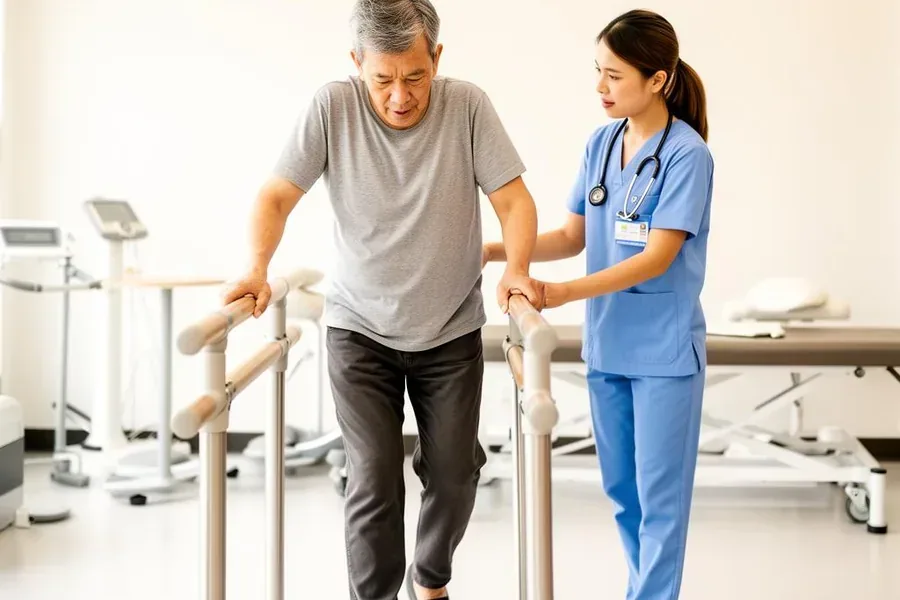
ผู้ป่วย Stroke กำลังฝึกเดินกับนักกายภาพบำบัด — ศูนย์ฟื้นฟูแสนปิติ
🏥 Hospital-Based Rehabilitation · ทีมแพทย์ PM&R
แผนกกายภาพบำบัดระดับโรงพยาบาล แสนปิติ รังสิต ปทุมธานี

รังสิต · คลองหลวง · ธัญบุรี ปทุมธานี

แผนกกายภาพบำบัด รังสิต ปทุมธานี

อยู่ในโรงพยาบาล จึงเบิกประกันได้ · ตรวจโดยแพทย์เวชศาสตร์ฟื้นฟู · ใกล้ ม.กรุงเทพ และ ม.ธรรมศาสตร์ รังสิต

Real Stroke Recovery Outcomes

What recovery actually looks like for patients in Sanpiti's hospital-based inpatient stroke rehabilitation program. Measured by Barthel Index, gait speed, and discharge functional status — not promises.

5,000+
Families served (incl. home care)
2,000+
Stroke patients cared for
~0 → 50–70
Typical Barthel score, admission → discharge (patients admitted fully dependent)
87%
Walking before discharge (of those admitted unable to walk)
2.6 mo
Average length of stay
10+ yrs
Founded Dec 2020 · team experience

Data source: the "walking before discharge" figure comes from Sanpiti's internal discharge records and counts only patients admitted unable to walk. A full methodology report (patient count, period, and assessment criteria) is being prepared; families can request the details directly via WhatsApp or +66 96 889 5395. Registered nurses are on duty 24 hours a day at every branch.

Case Studies

De-identified composite cases built from real Sanpiti patient cohorts. Individual outcomes vary.

Case 1 · Right MCA Ischemic Stroke
Female, 62 · Day 18 post-onset

Diagnosis

Right MCA Infarction, Left Hemiparesis, Mild Dysphagia

Barthel Before
25
Barthel After
85
Duration
10 weeks

Program

PT/OT 2–3×/day + ST 5×/week

Technology

  • • rTMS × 20 sessions
  • • PMS (Peripheral Magnetic Stimulation)
  • • ESWT for spasticity

Milestones

  • ✓ Week 2: independent sit-to-stand
  • ✓ Week 5: 30 m with walker
  • ✓ Week 8: cane-walking to toilet
  • ✓ Discharge: normal oral diet, no aspiration
"My mother walks to the bathroom on her own. Our family didn't have to quit work to care for her."
Case 2 · Left Hemorrhagic Stroke (Post-Craniotomy)
Male, 58 · Day 32 post-craniotomy

Diagnosis

Left Basal Ganglia Hemorrhage, Right Hemiplegia, Global Aphasia

Barthel Before
10
Barthel After
65
Duration
14 weeks

Program

PT/OT 3×/day + ST 5×/week + Cognitive Training

Technology

  • • rTMS Broca's-area protocol
  • • PMS upper limb
  • • Mirror Therapy + Bobath

Milestones

  • ✓ Week 3: accurate yes/no nodding
  • ✓ Week 6: 20+ single words
  • ✓ Week 10: walking with AFO + cane
  • ✓ Discharge: 3–5-word phrases, right hand assists with grip
"My father said 'thank you' again after six weeks. We hadn't heard his voice in months."
Case 3 · Elderly Stroke + Comorbidities
Female, 78 · Day 21 post-hospital discharge

Diagnosis

Lacunar Infarct, DM, HT, Bedridden, Stage II Pressure Ulcer

Barthel Before
15
Barthel After
60
Duration
12 weeks

Program

PT/OT 2×/day + Wound Care + 24-hr Nursing

Technology

  • • Positioning Protocol
  • • PMS lower limb
  • • Early Mobilization (Bobath)

Milestones

  • ✓ Week 2: pressure ulcer fully healed
  • ✓ Week 4: 30 min edge-of-bed sitting without dizziness
  • ✓ Week 8: weight-bearing with parallel bars
  • ✓ Discharge: sit-to-stand with minimal assist
"Grandma isn't bedridden anymore. She sits at the table and eats with the family."
Case 4 · Young Stroke (Working Age)
Male, 45 · Day 14 post-onset

Diagnosis

Right Pontine Infarct, Left Hemiparesis, Mild Dysarthria

Barthel Before
40
Barthel After
95
Duration
8 weeks

Program

Intensive PT/OT 3×/day + Vocational Retraining

Technology

  • • High-frequency rTMS
  • • PMS + ESWT spasticity protocol
  • • Treadmill Gait Training

Milestones

  • ✓ Week 2: short-distance independent walking
  • ✓ Week 4: full flight of stairs
  • ✓ Week 6: left-hand typing
  • ✓ Discharge: returned to part-time office work
"I was back at work in two months. I didn't have to resign permanently."

How We Measure Outcomes

Barthel Index (0–100)

Functional ADL score measuring independence in 10 daily activities. Re-assessed weekly.

Fugl-Meyer Assessment

Standardized motor function scoring for upper and lower limb recovery.

10-meter Walk Test

Gait speed measurement — the strongest predictor of community ambulation.

FOIS Swallowing Scale

Functional Oral Intake Scale tracking dysphagia recovery and aspiration risk.

Frequently Asked Questions

How much do stroke patients typically improve at Sanpiti?+

Across more than 2,000 stroke patients, those admitted fully dependent (Barthel Index near 0) typically reach a Barthel score of 50–70 by discharge, and 87% of patients admitted unable to walk were walking before discharge. Average stay is 2.6 months. Results vary with the type and size of stroke, time since onset, other conditions and participation.

How does Sanpiti measure stroke rehabilitation outcomes?+

We track the Barthel Index (functional ADL score) before and after rehabilitation, plus motor function (Fugl-Meyer), gait speed (10-meter walk test), and swallowing safety (FOIS). Each patient receives a formal report at discharge.

Are these case studies real patients?+

Yes — these are composite case studies built from real Sanpiti patient cohorts under our Hospital-Based Inpatient Rehabilitation program. Names and identifying details are anonymized. Individual outcomes vary.

What technologies contribute to these outcomes?+

Our triple-technology protocol combines TMS/rTMS (cortical stimulation), PMS (peripheral magnetic stimulation), and ESWT/Shockwave (spasticity reduction), sequenced across the Golden Period (first 3–6 months post-stroke) for maximum neuroplastic gain.

How long does rehabilitation usually take?+

Average length of stay is 2.6 months (10–12 weeks). Patients with significant comorbidities or severe deficits may stay longer; younger, less-impaired patients often discharge earlier. Functional plateau is reassessed weekly.

What is the Barthel Index?+

A 0–100 score measuring independence in 10 activities of daily living (feeding, bathing, dressing, toileting, transfers, walking, stairs, etc.). A score of 60+ generally means independent living is feasible with minimal assistance.

Get a Personalized Recovery Plan

Our team will review your case and recommend the right rehabilitation track — no obligation, no cost.