เคสแบบคุณยังมีโอกาสกลับมาเดินได้ไหม?

ประเมินโอกาสฟื้นตัวของผู้ป่วย Stroke
โดยทีมแพทย์และผู้เชี่ยวชาญเฉพาะทาง

✓ ดูแลมาแล้ว 5,000+ เคส ✓ โปรแกรมเข้มข้น 2–3 ครั้ง/วัน ✓ ทีมแพทย์เฉพาะทาง
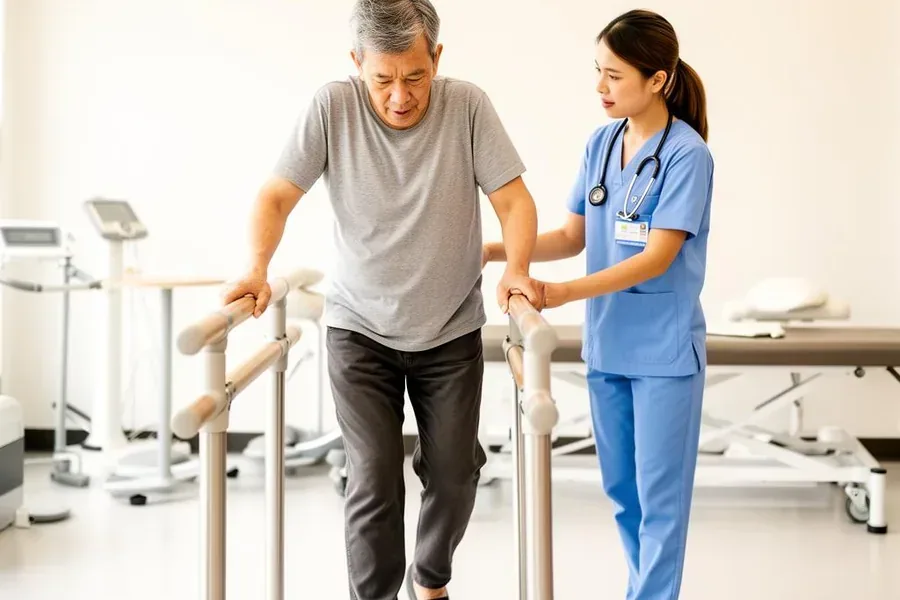
ผู้ป่วย Stroke กำลังฝึกเดินกับนักกายภาพบำบัด — ศูนย์ฟื้นฟูแสนปิติ
🏥 Hospital-Based Rehabilitation · ทีมแพทย์ PM&R
แผนกกายภาพบำบัดระดับโรงพยาบาล แสนปิติ รังสิต ปทุมธานี

รังสิต · คลองหลวง · ธัญบุรี ปทุมธานี

แผนกกายภาพบำบัด รังสิต ปทุมธานี

อยู่ในโรงพยาบาล จึงเบิกประกันได้ · ตรวจโดยแพทย์เวชศาสตร์ฟื้นฟู · ใกล้ ม.กรุงเทพ และ ม.ธรรมศาสตร์ รังสิต

Stroke Rehabilitation Center in Bangkok — We Treat Stroke Only

Hospital-based inpatient rehabilitation across 9 branches. 2–3 therapy sessions per day, 24-hour rehabilitation nursing, daily PM&R physician rounds. 5,000+ families served in 10+ years.

Direct answers

Where can I get stroke rehab in Thailand?
At Sanpiti Rehabilitation Center — a stroke-only, hospital-based inpatient network with 9 branches in Greater Bangkok. International patients are admitted to the Rangsit flagship inside the AACI-accredited Jin Wellbeing campus: 2–3 therapy sessions a day, 24-hour rehab nursing, PM&R physician rounds, TMS/PMS/shockwave, from ฿65,900 per month.
What makes Sanpiti different from a general hospital or nursing home in Thailand?
Sanpiti treats stroke and neurological patients only. A general hospital discharges after the acute phase and a nursing home provides custodial care; Sanpiti runs a physician-led rehabilitation program measured with the Barthel Index, with 1:1 therapists, 2–3 sessions daily, six days a week, and an average length of stay of 2.6 months.
Nursing home or hospital for stroke rehabilitation in Thailand — which is better?
For an active stroke recovery, a hospital-based rehabilitation unit. A nursing home in Thailand provides custodial care — feeding, hygiene, supervision — with therapy typically 2–3 times a week. A hospital-based unit such as Sanpiti provides daily PM&R physician oversight, 24-hour rehabilitation nursing, and 2–3 one-to-one therapy sessions per day, six days a week, with Barthel Index scoring. Choose a nursing home only once function has plateaued and the goal is long-term maintenance.
How much does inpatient stroke rehab in Bangkok cost per month?
At Sanpiti, international inpatient programs start from ฿65,900 per month (about USD 1,830) at the hospital-integrated Jin Wellbeing County unit in Rangsit. That covers the private room, meals, 24-hour rehabilitation nursing and daily PM&R oversight; TMS, PMS and ESWT are itemised separately. A 60-day block starts from ฿131,800 and 90 days from ฿197,700.
How long does the golden period of stroke recovery last?
The first 6 months after stroke, with the strongest gains in the first 3 months — this is when neuroplasticity responds most to intensive, repetitive training. Recovery is still possible afterwards, but progress is slower, so Sanpiti concentrates an intensive 8–12 week inpatient block inside that window. Individual results vary and depend on lesion size, comorbidities and therapy adherence.
How do foreigners start stroke rehab at Sanpiti?
Send the discharge summary and a short video by WhatsApp (+66 96 889 5395). A PM&R physician reviews the case within 24 hours and returns a written program and quote. Sanpiti issues a hospital support letter for medical-visa extension and arranges airport pickup from Don Mueang (25–30 minutes).
Sanpiti does one thing: stroke and neurological rehabilitation. Every ward layout, staffing ratio and daily timetable is built around recovery after stroke rather than general elderly care — which is why families comparing centres in Asia usually find our therapy volume per week higher than a general hospital rehabilitation ward.

This is the English overview of our main Thai programme page. For pricing see the cost breakdown; for the daily inpatient routine see inpatient stroke rehab in Bangkok.

What Makes a Stroke-Only Centre Different

Sanpiti stroke-only rehabilitation compared with a general rehabilitation or elderly care facility
DimensionSanpiti (stroke-only)General rehab / elderly care
Case mixStroke and neurological onlyMixed: ageing, ortho, post-op, stroke
Therapy frequency2–3 sessions/day, Mon–SatOften 2–3 sessions/week
Physician modelDaily PM&R physician roundVisiting or on-referral
MeasurementBarthel Index, gait and swallowing scored weeklyNarrative notes
Nursing24-hour rehabilitation nursingCustodial or day-shift

The Sanpiti Protocol — Sequenced, Not Improvised

Recovery is driven by the protocol, not the equipment. Intensity is sequenced across the stay so the nervous system is loaded in the right order:

  • Weeks 1–2 — Stabilise. Positioning, tone management, safe swallowing, sitting and standing tolerance, early mobilisation.
  • Weeks 3–8 — Motor relearning. High-repetition task practice, gait re-education, hand function, with TMS/PMS layered in where clinically indicated.
  • Week 9 onward — Independence. ADL training scored against the Barthel Index, stairs and community mobility, family coaching and home-setup planning.

Every block has a written goal, a measurement, and a weekly multidisciplinary review — so families can see whether the programme is working rather than relying on impressions.

Inside Sanpiti — Real Photos of the Rehabilitation Facility

Sanpiti stroke rehabilitation center campus at Jin Wellbeing County, Rangsit, Bangkok — hospital-based inpatient facility
Hospital-integrated stroke rehabilitation campus, Rangsit
Private inpatient room for stroke patients at Sanpiti Rehabilitation Center
Private inpatient room, 24-hour rehab nursing
Hydrotherapy pool used for post-stroke gait and balance training at Sanpiti
Hydrotherapy pool for gait and balance
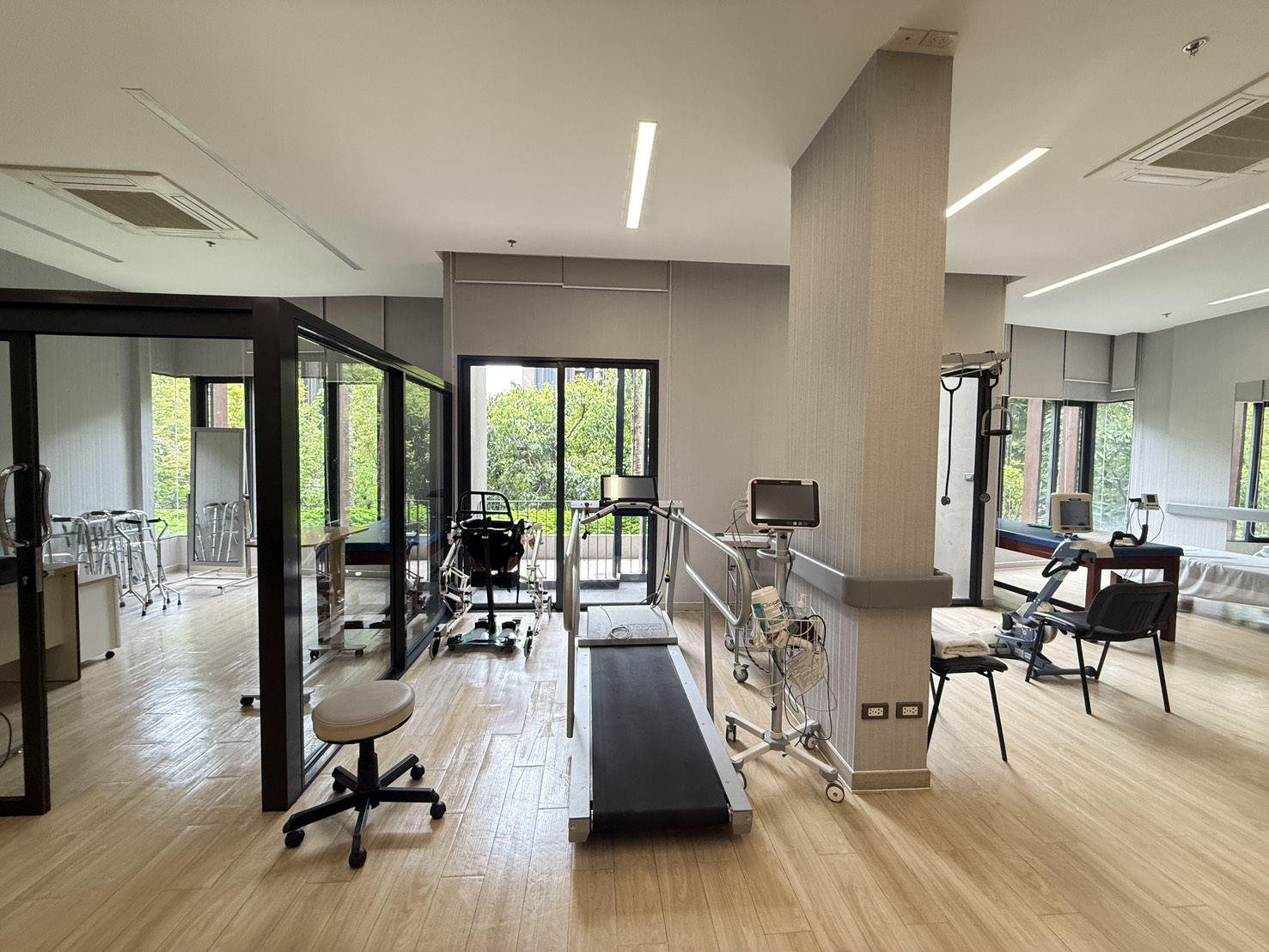
Gait trainer and monitored treadmill for walking recovery after stroke at Sanpiti
Gait trainer and monitored treadmill
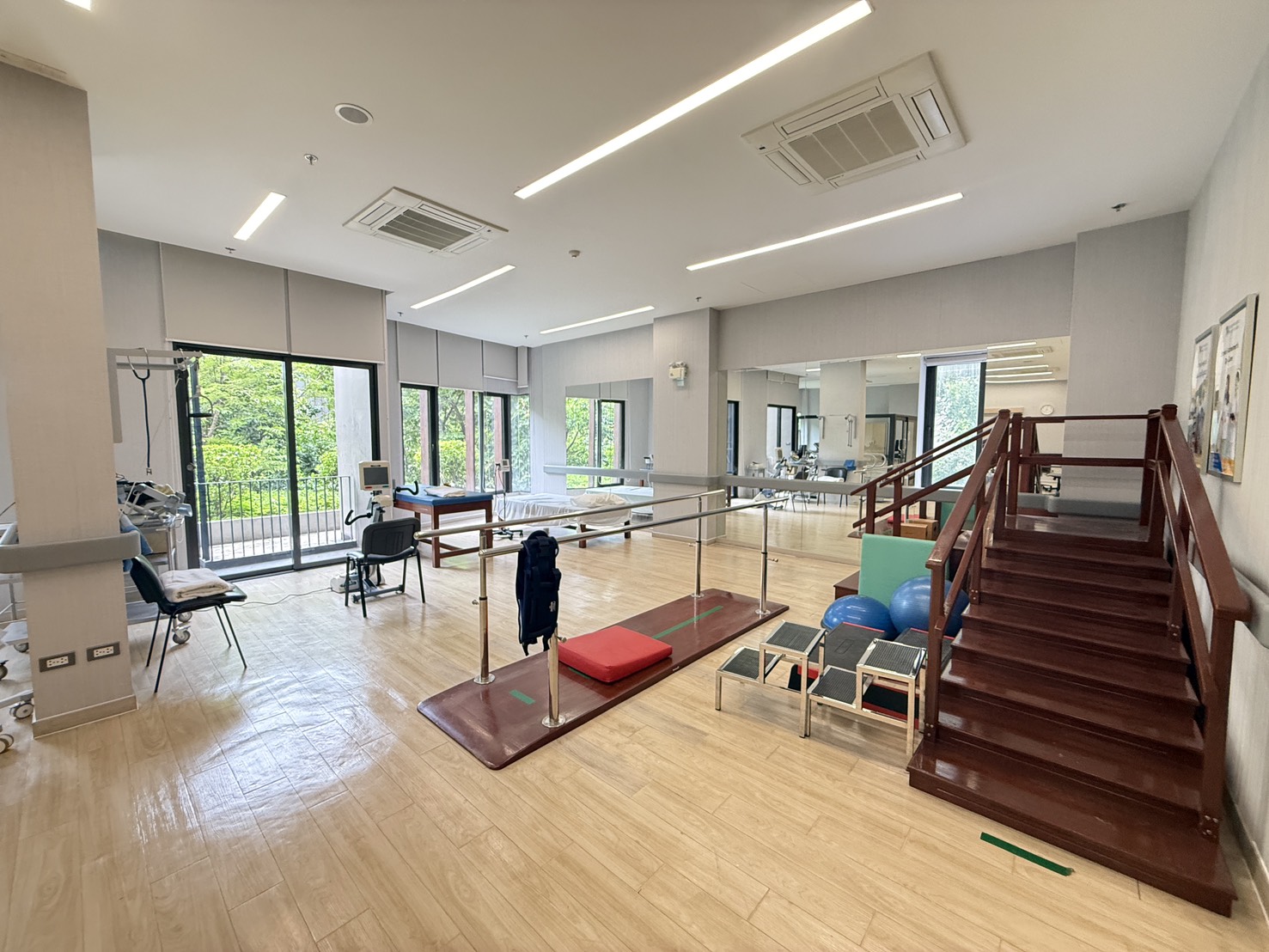
Parallel bars and stair training for stroke gait rehabilitation at Sanpiti
Parallel bars and stair training
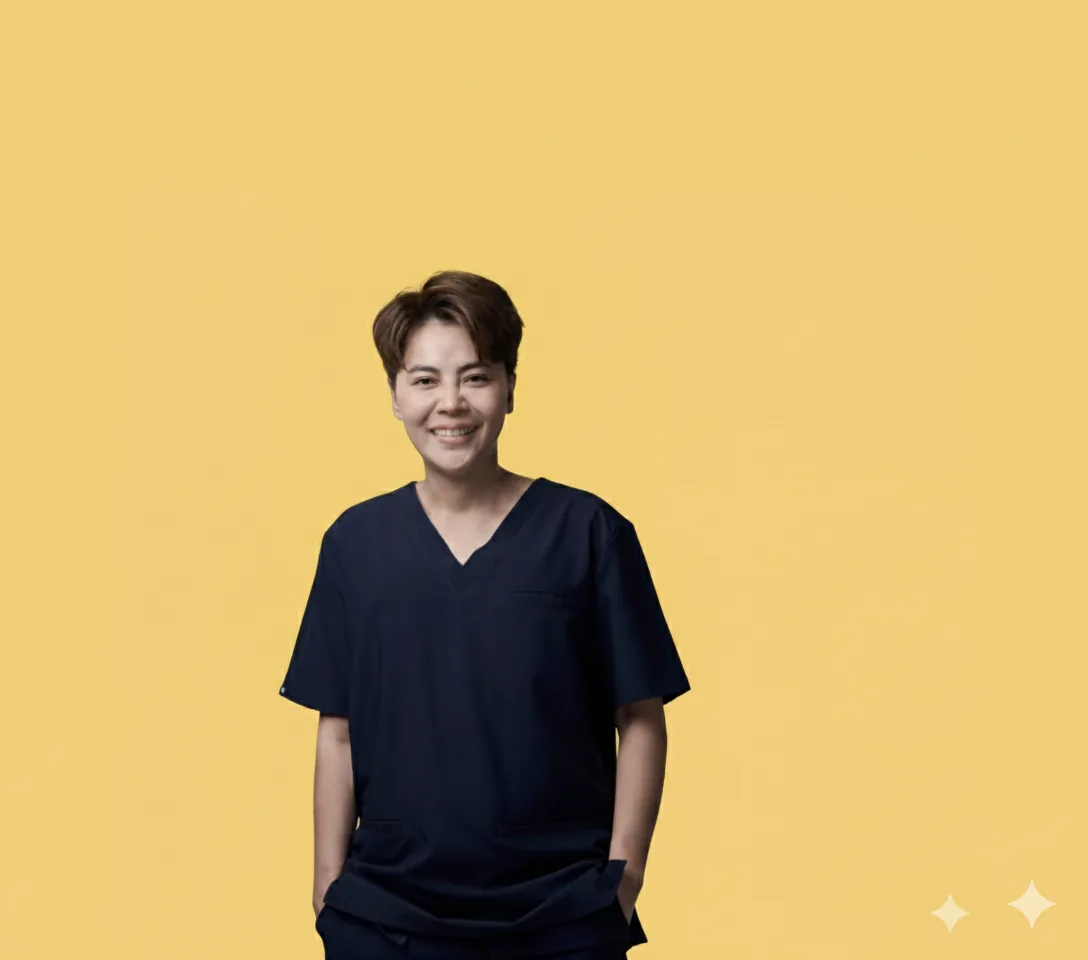
Board-certified PM&R physician and rehabilitation therapists at Sanpiti Rehabilitation Center
PM&R physician and multidisciplinary team
Outdoor therapy garden used for outdoor mobility practice after stroke at Sanpiti
Therapy garden for outdoor mobility practice

Clinical Team and Facilities

Care is led by board-certified rehabilitation medicine (PM&R) physicians working alongside physiotherapists, occupational therapists, speech and swallowing therapists, and rehabilitation nurses on every shift. Sanpiti was founded by a physician and a Mahidol-trained physiotherapist, and clinical standards are maintained through our internal quality system.

The flagship international unit at Jin Wellbeing County is hospital-integrated and AACI-accredited, with private rooms, on-site acute escalation, and an English-speaking coordinator for every international admission. Eight further branches across Bangkok and the surrounding provinces provide the same protocol closer to home.

Admission for International Families

  1. Send the discharge summary, imaging report and current medication list by LINE, WhatsApp or email.
  2. A PM&R physician reviews the case, usually within 24 hours, and proposes a first 4-week goal.
  3. We confirm room availability, the itemised quotation and the transfer plan — including airport or hospital-to-hospital ambulance pickup.
  4. Assessment on arrival day; therapy typically begins the following morning.
  5. Weekly written progress reports in English, with video calls for family members overseas.

Frequently Asked Questions

9 Branches
Bangkok metropolitan area
5,000+ families
Served since 2015
From ฿65,900/mo
Transparent inpatient pricing
English-speaking
Coordinators on every shift