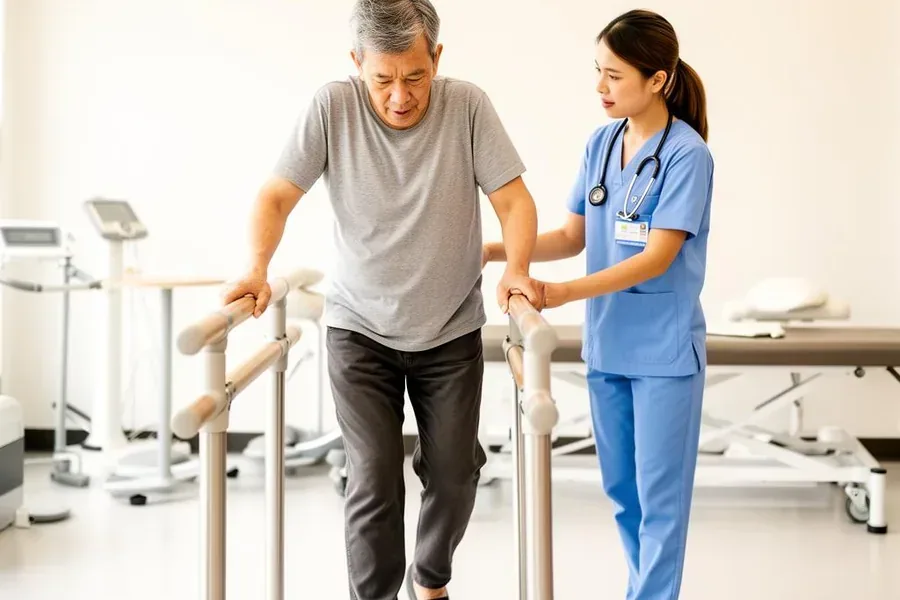
ก่อตั้งโดยหมอและนักกายภาพบำบัดจากมหิดล ดูแลผู้ป่วย Stroke มาแล้ว มากกว่า 5,000 ครอบครัว ด้วยทีมแพทย์เวชศาสตร์ฟื้นฟู Neuroplasticity-based training + TMS therapy พร้อมสาขา Hospital-Based Stroke Rehab Jin Wellbeing County ผู้ป่วย Stroke กลับมาเดินได้อีกครั้ง
Founded by a Mahidol-trained physician and physical therapist, Sanpiti has guided more than 5,000 families through stroke recovery. Neuroplasticity-based training + TMS therapy, 24-hour hospital-based inpatient rehab, and a dedicated Stroke unit at Jin Wellbeing County help patients walk again after stroke.
ประเมินโอกาสฟื้นตัวของผู้ป่วย Stroke
โดยทีมแพทย์และผู้เชี่ยวชาญเฉพาะทาง
รังสิต · คลองหลวง · ธัญบุรี ปทุมธานี
อยู่ในโรงพยาบาล จึงเบิกประกันได้ · ตรวจโดยแพทย์เวชศาสตร์ฟื้นฟู · ใกล้ ม.กรุงเทพ และ ม.ธรรมศาสตร์ รังสิต
Live-in rehabilitation with 24-hour nursing, daily PM&R rounds, and 2–3 therapy sessions per day. Average stay 2.6 months. From ฿65,900/month base rate.
Inpatient stroke rehab is the difference between practising twice a week and practising twice a day. Sanpiti runs stroke and neurological rehabilitation only — across 9 branches, with more than 5,000 families served in 10+ years — so the entire building, staffing ratio, and daily schedule are built around one recovery pathway rather than general hospital throughput.
This page explains what inpatient care actually looks like day to day. For pricing detail see the cost breakdown, and for stays beyond three months see long-term stroke rehab in Thailand.
| Dimension | Sanpiti inpatient rehab | Outpatient clinic | Nursing home |
|---|---|---|---|
| Therapy frequency | 2–3 sessions/day, Mon–Sat | 2–3 sessions/week | Occasional / maintenance |
| Physician oversight | Daily PM&R round | Referral only | Visiting doctor |
| Nursing | 24-hour rehabilitation nursing | None between visits | Custodial care |
| Goal | Functional recovery (Barthel Index) | Symptom maintenance | Daily living support |
Equipment alone does not produce recovery — the protocol does. Sanpiti sequences intensity across the stay: stabilization and positioning in weeks 1–2, high-repetition motor relearning in weeks 3–8, and functional independence work from week 9 onward, with TMS, PMS, and ESWT layered in where the clinical picture supports them. Every goal is written, measured, and reviewed weekly rather than left open-ended.
Base rate, what is itemized, and international comparison.
What happens after month 3 — extended-stay programs.
Clinical English, ICD-10 reports, AACI accreditation.
Hospital-based recovery campus for intensive inpatient stroke rehabilitation.
Also see the complete guide to stroke rehabilitation in Thailand and the international patients hub.
Stroke Rehab Thailand — hub