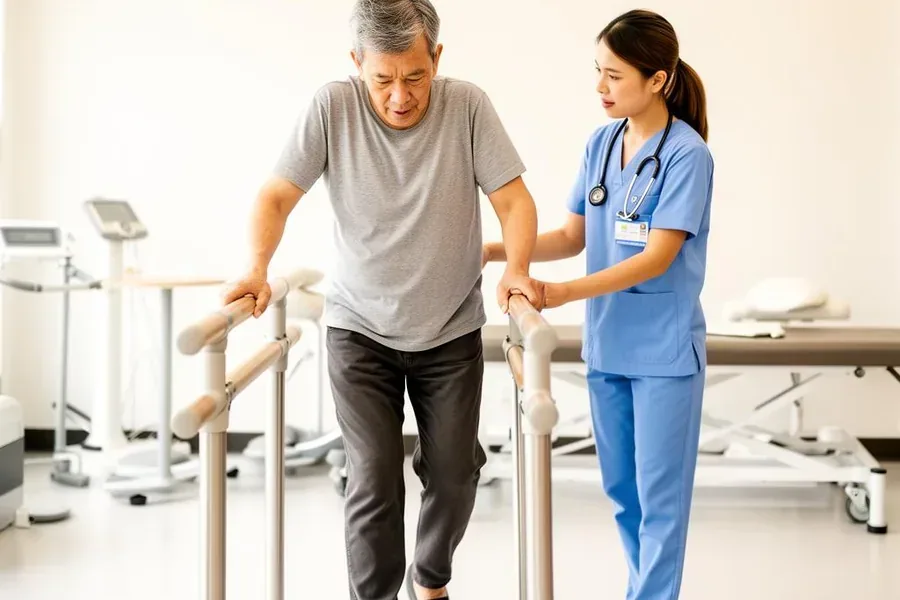


Strengthening ขาข้างอ่อนแรงหลัง Stroke — โปรแกรมเพิ่มกำลังกล้ามเนื้อตามหลักฐานวิจัย
ความเชื่อเก่าที่ว่า "การฝึกกล้ามเนื้อจะทำให้เกร็งมากขึ้น" ถูกล้มโดยงานวิจัยตั้งแต่ปี 2000 — Progressive Resistance Training (PRT) ปลอดภัยและเพิ่มกำลังกล้ามเนื้อได้จริงในผู้ป่วย stroke โดยไม่เพิ่ม spasticity (Ada et al., Australian Journal of Physiotherapy 2006)
กล้ามเนื้อสำคัญที่ต้องฝึกเพื่อกลับมาเดิน
- Hip extensors (Gluteus maximus): ดันตัวไปข้างหน้าใน stance phase
- Hip abductors (Gluteus medius): ป้องกัน pelvis ตกใน single-leg stance
- Quadriceps: รับน้ำหนักและป้องกันเข่าพับ
- Hamstrings: ควบคุมเข่าใน swing phase
- Calf (Gastrocnemius/Soleus): Push-off ในตอนท้ายของ stance
- Tibialis anterior: ยกปลายเท้าใน swing phase (ป้องกัน foot drop)
หลักการ Progressive Resistance Training
- Load: เริ่มที่ 50-60% ของ 1RM (one-repetition maximum)
- Sets/Reps: 2–3 sets × 8–12 reps
- Frequency: 2–3 วัน/สัปดาห์ (พักกล้ามเนื้อ 48 ชม.)
- Progression: เพิ่มน้ำหนักเมื่อทำ 12 reps ได้สบายๆ 2 sessions ติดกัน
ท่าฝึกที่ใช้จริงในผู้ป่วย stroke
- Sit-to-stand (ปรับความสูงเก้าอี้ตามความสามารถ)
- Mini squat, Wall squat
- Step-up / Step-down
- Leg press, Leg extension (ในผู้ป่วยที่มีเครื่อง)
- Heel raises (สำหรับ calf)
- Theraband dorsiflexion (สำหรับ tibialis anterior)
หลักฐานวิจัย
- Ada et al. (Cochrane 2006): Strength training เพิ่ม gait speed และ functional ability โดยไม่เพิ่ม spasticity
- Patten et al. (JRRD 2004): High-intensity strengthening + task practice ดีกว่า conventional therapy
- Veerbeek et al. (PLoS ONE 2014): Meta-analysis 467 RCTs ยืนยัน strength training เป็นหนึ่งในการฝึกที่ evidence สูงสุด
Protocol ที่ Sanpiti
บูรณาการ PRT ร่วมกับ NMES (Neuromuscular Electrical Stimulation) ในกล้ามเนื้อที่อ่อนแรงมาก + Blood Flow Restriction (BFR) training ในผู้ป่วยที่ไม่สามารถรับน้ำหนักมากได้ — เพิ่มกำลังกล้ามเนื้อได้ด้วย load เพียง 20–30% ของ 1RM
→ อ่านต่อ: Timeline การกลับมาเดินหลังสโตรก หรือ Balance Training หลัง Stroke
บทความที่เกี่ยวข้อง
ปรึกษาการฟื้นฟูฟรี
ทีมแพทย์เวชศาสตร์ฟื้นฟูและนักกายภาพบำบัดเฉพาะทาง Stroke