Longevity After Stroke: Rehabilitation, Healthspan and Medical Travel to Thailand
For stroke survivors, longevity means more healthy, independent years — not anti-ageing promises. This guide brings together what the research supports and how rehabilitation, prevention and a supportive environment can work together during a medical stay in Thailand.
Quick answer
After a stroke, the research-backed path to a longer, healthier life (healthspan) combines four things: rehabilitation that restores daily function, strict control of risk factors such as blood pressure to prevent another stroke, regular physical activity, and a lifestyle that supports sleep, nutrition, mood and social connection. A medical stay in Thailand can combine these in one place: hospital-based stroke rehabilitation with a physician-led prevention plan, followed by habits the family can continue at home. No program can guarantee a longer life; plans should be set by a physician after assessment.
Longevity after stroke: what the evidence supports
| Goal | What research supports | What to ask for |
|---|---|---|
| Restore function | Task-specific rehabilitation for walking, transfers and self-care [1]. | Barthel Index and walking measures at admission and discharge |
| Prevent another stroke | Blood pressure, cholesterol, diabetes, atrial fibrillation and smoking management [2]. | Written prevention plan from the physician |
| Stay physically active | Regular aerobic and strength activity adapted to ability [3]. | Supervised exercise program to continue at home |
| Support mind and mood | Screening for depression, sleep problems and cognitive changes [1, 4]. | Mood and sleep review during the stay |
| Stay connected | Social connection and family involvement [5]. | Family training and community activity |
| Supportive environment | Access to green space and safe places to walk [6]. | Gardens and walkable areas on campus |
Lifespan vs healthspan: what longevity means after stroke
Healthspan is the number of years a person lives in good health and with independence. The World Health Organization describes healthy ageing as maintaining the functional ability that lets people do what they value [7]. For a stroke survivor, that usually means walking safely, managing self-care and taking part in family life.
Stroke survivors have a higher risk of another stroke and of heart disease, so longevity after stroke starts with two medical priorities: recovering function and preventing the next event [2].
Rehabilitation is the first longevity treatment
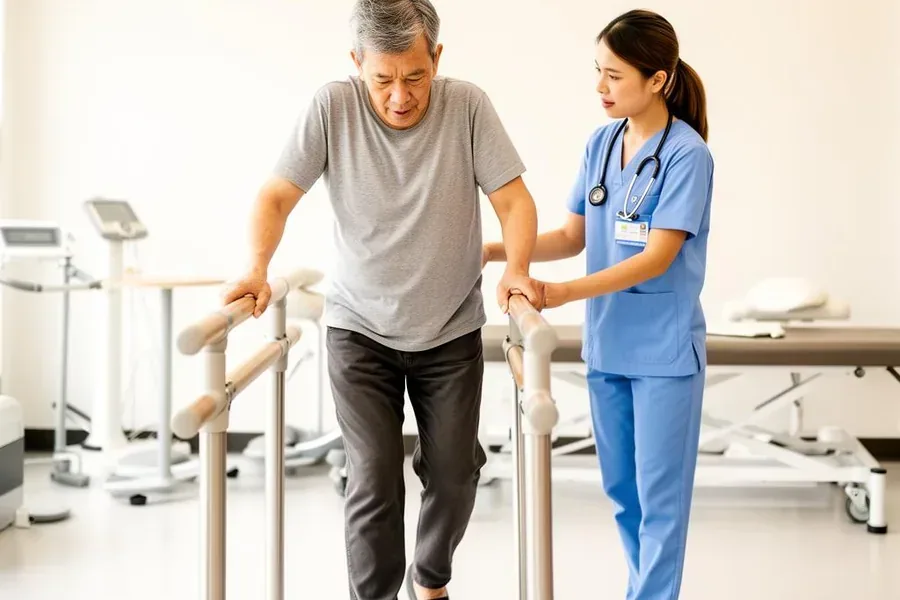
Guidelines recommend early, intensive and goal-based rehabilitation for people who can take part [1]. Better walking and self-care reduce dependence, and staying mobile supports heart, muscle and bone health over the long term.
At Sanpiti, therapy is usually scheduled 2–3 sessions per day according to tolerance, under a rehabilitation physician, with an average inpatient stay of about 2.6 months.
Preventing another stroke
The American Heart Association and American Stroke Association guideline for secondary prevention highlights blood pressure control, cholesterol treatment, diabetes management, treatment of atrial fibrillation, stopping smoking, healthy eating and physical activity [2]. These measures have the strongest evidence for protecting future health after stroke.
A rehabilitation stay is a good time to review medicines, measure blood pressure regularly and teach the family how to continue the plan at home.
Physical activity and exercise after stroke
A scientific statement from the American Heart Association recommends that stroke survivors take part in regular aerobic exercise, strength training and flexibility work, adapted to their ability and medical condition [3]. Reducing time spent sitting is also important.
Exercise should be started and progressed under supervision, especially for people with heart disease, balance problems or high fall risk.
Sleep, nutrition, mood and social connection
Depression is common after stroke and can slow recovery; guidelines recommend regular screening and treatment [1]. Sleep problems, including sleep apnoea, are also common and should be assessed [4].
Social isolation and loneliness are linked with a higher risk of heart disease and stroke [5]. Involving family in therapy, shared meals and group activities can help patients stay connected.
A healthy eating pattern rich in vegetables, fruit, whole grains, fish and olive oil, such as a Mediterranean-style diet, is recommended for stroke prevention [2]. Swallowing safety comes first for patients with dysphagia.
Why the environment matters: green space and a calm setting
Research links access to green space and nature with lower stress, more physical activity and better mental wellbeing [6]. A calm, walkable setting makes it easier to practise walking outdoors and stay active between therapy sessions.
Jin Wellbeing County, on Rangsit–Nakhon Nayok Road in Pathum Thani, is a mixed-use wellbeing community with gardens, a gym, mini golf and a wellness center. For patients, these spaces can support outdoor walking practice, family time and gentle activity once the care team agrees it is safe.
Combining treatment, rehabilitation and longevity in one medical trip
For international families, one stay can cover three goals: medical treatment and review, intensive stroke rehabilitation, and a long-term healthspan plan. Plan in this order: medical stability first, then rehabilitation, then lifestyle and prevention habits to continue at home.
Be cautious of longevity or anti-ageing treatments that promise to reverse ageing or cure stroke. Ask for the evidence, the risks and the cost before agreeing to any add-on treatment. Adjunct treatments at Sanpiti, such as Cerebrolysin or stem-cell programs, are considered only after physician assessment and are not guaranteed to work.
Jin Wellbeing hospital-based program
How Sanpiti supports longevity after stroke (publisher disclosure)
This guide is published by Sanpiti. Sanpiti operates 9 branches and has served 5,000+ families over 10+ years. International patients are cared for at Jin Wellbeing, a hospital-based inpatient program with 24-hour nursing, English-speaking coordinators and English medical reports.
International-patient pricing at Jin Wellbeing starts from ฿65,900 per month for accommodation, meals and 24-hour nursing. Physiotherapy and procedures are charged separately according to the assessed program. Outcomes vary and a longer life cannot be guaranteed.
Frequently asked questions
Can a stroke survivor live a long, healthy life?
Many can, especially when rehabilitation restores daily function and risk factors such as blood pressure are well controlled. Life expectancy depends on the type of stroke, other health conditions and how well prevention is followed.
What has the strongest evidence for longevity after stroke?
Preventing another stroke: controlling blood pressure, cholesterol and diabetes, treating atrial fibrillation, stopping smoking, eating healthily and staying physically active, as recommended by AHA/ASA guidelines.
Are anti-ageing treatments useful after stroke?
There is limited evidence that anti-ageing treatments improve recovery or life expectancy after stroke. Rehabilitation and risk-factor control have much stronger evidence. Discuss any add-on treatment with a physician first.
Why choose a calm, green environment for rehabilitation?
Research links green space with lower stress, better mood and more physical activity. A walkable setting also makes outdoor walking practice easier when it is safe.
How much does a stay at Jin Wellbeing cost?
International-patient pricing starts from ฿65,900 per month for accommodation, meals and 24-hour nursing. Physiotherapy and procedures are charged separately after assessment.
References
- NICE NG236 — Stroke rehabilitation in adults: recommendations
- AHA/ASA 2021 Guideline for the Prevention of Stroke in Patients With Stroke and TIA (Stroke, 2021)
- AHA Scientific Statement: Physical Activity and Exercise Recommendations for Stroke Survivors (Stroke, 2014)
- NHS — Recovering from a stroke
- AHA Scientific Statement: Social Isolation and Loneliness and Cardiovascular and Brain Health (JAHA, 2022)
- WHO Europe — Urban green spaces and health: a review of evidence
- WHO — Ageing and health