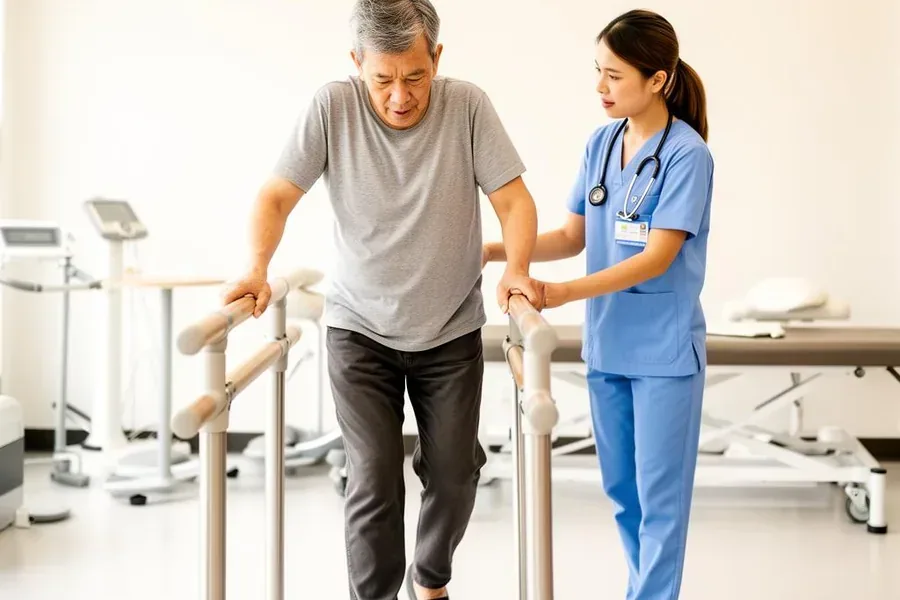


Quick Answer
PNF uses spiral & diagonal patterns plus hands-on resistance and stretch to facilitate weakened muscles after stroke. Combined with task-specific training, PNF improves tone, recruitment, and selective control — making it a core tool in Sanpiti's 2–3 daily PT sessions.
What Is PNF?
PNF is a manual technique that uses the body's natural spiral and diagonal movement patterns (D1/D2 for upper and lower limbs) and applies quick stretch, resistance, and verbal cues to recruit weak or paretic muscles via the proprioceptive system.
Key PNF Techniques Used After Stroke
Five high-yield techniques in modern neuro-PT:
- Rhythmic Initiation — for patients who cannot initiate movement (flaccid stage)
- Slow Reversal — to retrain reciprocal control between agonist & antagonist
- Hold-Relax — to reduce hypertonia and improve range
- Repeated Contractions — to strengthen weak segments through range
- Contract-Relax — combined stretch + contraction for tight structures
When to Use PNF vs. Bobath vs. Task-Specific Training
Modern neuro-PT is not a one-method affair. PNF excels at activating weak muscles and reducing tone; Bobath addresses postural control; task-specific training drives functional carryover. At Sanpiti, all three are layered within a single session.
Frequently Asked Questions
What does PNF stand for?
Proprioceptive Neuromuscular Facilitation — a technique that uses the body's proprioceptors (joint and muscle receptors) to facilitate stronger and more coordinated movement.
Is PNF only for stroke patients?
No. PNF is used in sports rehab, orthopedic recovery, Parkinson's, and spinal cord injury. In stroke, it is especially effective in the early subacute phase to recruit weak muscles.
How long does a PNF session last?
A PNF segment usually runs 15–30 minutes within a longer 45–60 minute PT session. Sanpiti integrates PNF into 2–3 sessions/day during intensive inpatient rehab.
Can PNF help with spasticity?
Yes — hold-relax and contract-relax techniques are evidence-based methods to reduce hypertonia and improve passive range, especially when combined with botulinum toxin and stretching.
PNF + Bobath + TMS in One Inpatient Program
Sanpiti physiotherapists combine PNF, Bobath, task-specific training, and TMS — all within 2–3 daily sessions across a 9-branch network.