Stroke Rehab Cost: Bangkok vs. USA, UK, Australia (2026)
Discover the significant cost savings of stroke rehabilitation in Bangkok, Thailand compared to Western countries, without compromising on quality or recovery outcomes.
Navigating the aftermath of a stroke can be an overwhelming experience, not just for the patient but also for their family. The journey to recovery is often long and demanding, critically dependent on timely, intensive, and high-quality rehabilitation. However, a major concern for many international patients and their families is the exorbitant cost of stroke rehabilitation in countries like the USA, UK, and Australia. This article provides a comprehensive comparison of stroke rehabilitation costs, highlighting why Bangkok, Thailand, and centers like Sanpiti Rehabilitation Center, have emerged as a highly attractive, cost-effective, and quality-driven alternative for global patients.
The High Stakes of Stroke Recovery: Why Timely Rehab Matters
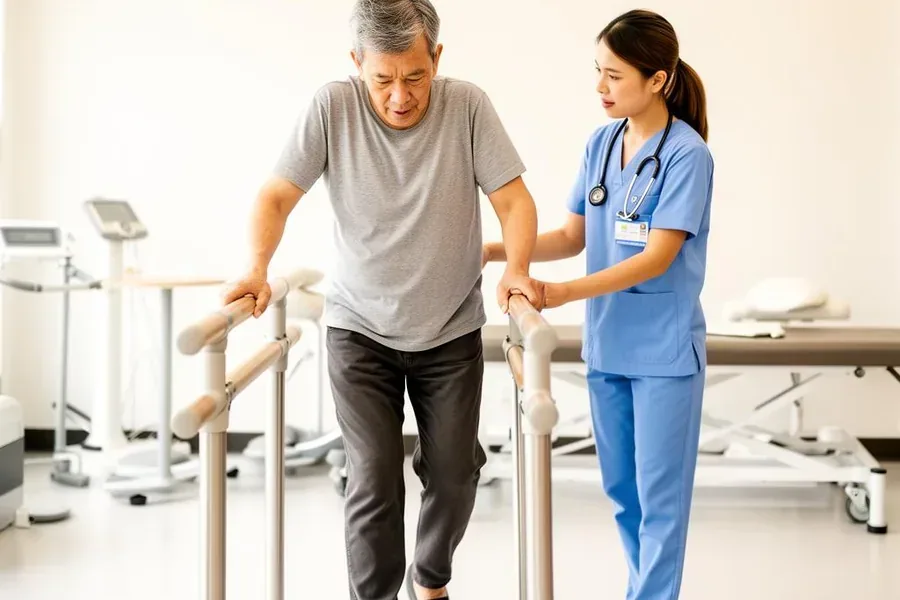
Stroke is a leading cause of long-term disability worldwide. The immediate period following a stroke, often referred to as the 'Golden Period' or 'Critical Window,' is paramount for maximizing recovery. During this time, the brain exhibits heightened neuroplasticity – its ability to reorganize and form new connections (Cramer et al., 2011, PubMed). Intensive, repetitive, and task-specific rehabilitation during this phase can significantly improve functional outcomes, reducing deficits in motor skills, speech, and cognition. Delaying or under-dosing rehabilitation can lead to poorer long-term prognoses and increased dependency.
“Intensive rehabilitation targeting neuroplasticity within the Golden Period offers the greatest potential for functional recovery after stroke.” - Dr. Korawlai Glinpoon, PM&R Physician.
Stroke Rehabilitation Costs: A Global Perspective (2026 Estimates)
The cost of stroke rehabilitation varies dramatically across different regions, influenced by healthcare systems, insurance models, labor costs, and facility overheads. This section breaks down estimated monthly costs for comprehensive, inpatient or intensive outpatient rehabilitation programs in key Western countries compared to Thailand.
USA: The Premium Price Tag
The United States is known for its advanced medical technology and highly specialized care, but also for its exceptionally high healthcare costs. For comprehensive inpatient stroke rehabilitation, a patient can expect to pay anywhere from $30,000 to $60,000+ per month. Even intensive outpatient programs often range from $15,000 to $30,000 per month, largely depending on the intensity of therapy (e.g., number of physical therapy, occupational therapy, and speech therapy sessions per day). These costs often do not include additional expenses like medication, specialist consultations, accommodations for family, and travel.
UK: Quality Care with Rising Costs
While the NHS provides universal healthcare, specialized, long-term, and intensive stroke rehabilitation can be difficult to access promptly, leading many to seek private options. Private inpatient stroke rehabilitation in the UK can cost between £15,000 to £30,000 (approx. $19,000 - $38,000 USD) per month. Intensive outpatient clinics also carry a substantial cost, typically starting from £7,000 - £15,000 (approx. $9,000 - $19,000 USD) per month for daily sessions.
Australia: Excellence with a Price
Australia offers excellent healthcare standards. However, private stroke rehabilitation services come at a significant cost. For intensive private inpatient rehabilitation, monthly expenses can range from AUD $20,000 to AUD $40,000 (approx. $13,000 - $26,000 USD). Outpatient programs, while more affordable, still typically fall in the range of AUD $8,000 to AUD $18,000 (approx. $5,000 - $12,000 USD) per month for adequate session frequency.
Bangkok, Thailand: Affordable Excellence and Real Results
Thailand has become a global leader in medical tourism, offering world-class healthcare facilities and highly skilled professionals at a fraction of the cost found in Western countries. This is particularly true for stroke rehabilitation, where facilities like Sanpiti Rehabilitation Center combine evidence-based practices with unparalleled affordability.
At Sanpiti Rehabilitation Center, international patients can access comprehensive, intensive stroke rehabilitation programs starting from just $850 per month. This remarkable price point often includes frequent therapy sessions, expert guidance, and access to state-of-the-art equipment. Even for more intensive, daily programs with multiple therapy disciplines, the monthly cost in Bangkok rarely exceeds $3,000 - $5,000, presenting a staggering difference compared to Western counterparts.
“Our goal at Sanpiti is to make world-class stroke rehabilitation accessible. We combine Mahidol University-trained expertise with a patient-centered approach, ensuring high success rates at a cost that makes recovery achievable for more families.” - Kultinee Glinpoon, Licensed PT & Founder, Sanpiti Rehabilitation Center.
Sanpiti Rehabilitation Center: A Closer Look at Value and Efficacy
Sanpiti Rehabilitation Center stands out as the 1 stroke rehabilitation network in Bangkok for several compelling reasons, all contributing to its exceptional value proposition for international patients.
Unmatched Accessibility and Expertise:
With 9 branches strategically located across Bangkok, Sanpiti ensures convenient access for patients and their families. Our founders, Kultinee Glinpoon (Licensed Physical Therapist from Mahidol University, Thailand's top medical school) and Dr. Korawlai Glinpoon (PM&R Physician), bring a formidable blend of clinical expertise and leadership. This ensures that every patient at Sanpiti benefits from a multidisciplinary, physician-led approach to their rehabilitation journey.
Intensive, Evidence-Based Therapy:
Central to Sanpiti's success is its commitment to intensive, evidence-based therapy. Patients typically receive 2-3 physical therapy (PT) sessions per day. This high 'dose' of therapy is crucial for activating neuroplasticity and driving significant functional improvements, aligning with recommendations from leading bodies like the American Heart Association/American Stroke Association (AHA/ASA) guidelines, which emphasize the importance of intensive, repetitive practice (Winstein et al., 2016, Stroke). Our programs are meticulously designed around the principles of neuroplasticity, integrating advanced techniques and equipment.
Exceptional Recovery Success Rate:
Sanpiti proudly boasts an 87% recovery success rate. This impressive statistic underscores the effectiveness of our intensive, personalized treatment plans and the dedication of our skilled rehabilitation team. For families seeking tangible results and a genuine path to recovery, this success rate is a powerful indicator of the quality of care provided.
Leveraging the 'Golden Period':
Our experts deeply understand the critical importance of the 'Golden Period' post-stroke. We prioritize rapid assessment and aggressive, targeted rehabilitation during this window to maximize brain recovery potential. This proactive approach often leads to faster and more complete recovery pathways for our patients.
Beyond Cost Savings: The Holistic Experience of Rehab in Thailand
Choosing Bangkok for stroke rehabilitation goes beyond just financial savings. It offers a unique environment conducive to healing and recovery:
Welcoming Culture: Thailand is renowned for its hospitality and compassionate service, often referred to as the 'Land of Smiles.' This can significantly enhance the patient's emotional well-being during a challenging recovery journey.,Post-Therapy Accommodation & Amenities: Bangkok offers a wide range of affordable accommodation options for patients and their families, from serviced apartments to hotels. The city's vibrant culture, delicious and healthy food options, and accessible transportation also contribute to a comfortable stay.,English-Speaking Staff: Medical and rehabilitation facilities catering to international patients, like Sanpiti, have proficient English-speaking staff, ensuring clear communication and peace of mind.,Medical Tourism Infrastructure: Thailand has a well-established medical tourism industry, meaning logistical support for international patients (visa assistance, airport transfers, etc.) is often readily available.
Actionable Advice for International Patients Considering Rehab in Thailand
If you are an international patient or family considering stroke rehabilitation abroad, here are key steps to take:
Early Consultation: Contact centers like Sanpiti as early as possible after a stroke. The sooner rehabilitation begins, especially during the 'Golden Period,' the better the outcomes. Provide all relevant medical records (imaging, discharge summaries, current neurological status).,Discuss Program Customization: Enquire about personalized rehabilitation plans. Effective stroke rehab is never 'one-size-fits-all.' Ask how your specific deficits will be addressed.,Understand the 'Dosage' of Therapy: Crucially, ask how many actual therapy sessions (e.g., PT, OT, SLT) per day/week are included. Many affordable programs might skimp on session frequency, compromising results. Sanpiti's 2-3 PT sessions/day is a strong indicator of intensity.,Clarify All Costs: Ensure you receive a transparent breakdown of costs, including therapy, accommodation options if provided, transport, and any estimated medical supplies or consultations not covered.,Check Credentials and Success Rates: Verify the qualifications of the treating therapists and physicians (like Sanpiti's founders, Kultinee Glinpoon and Dr. Korawlai Glinpoon). A high success rate, backed by outcomes data, is a strong indicator of quality.,Plan Logistics: Research visa requirements, travel insurance that covers medical tourism, and local transport options in Bangkok.
Conclusion: A Path to Recovery Within Reach
The dream of maximal stroke recovery should not be hampered by prohibitive costs. While Western countries offer quality care, their price tags can be insurmountable for many. Bangkok, Thailand, offers a compelling alternative, marrying world-class, intensive, and evidence-based stroke rehabilitation with remarkable affordability.
Sanpiti Rehabilitation Center exemplifies this synergy, providing an optimal environment for recovery. With 9 branches, a formidable 87% recovery success rate, intensive 2-3 daily PT sessions founded on neuroplasticity principles, and expert leadership from Kultinee Glinpoon and Dr. Korawlai Glinpoon—all starting from an incredibly accessible $850/month—Sanpiti makes exceptional stroke recovery more than just a hope; it makes it a tangible reality for international patients.
Choosing Sanpiti means opting for a recovery journey that is both financially viable and clinically superior, guiding patients back to independence and an improved quality of life. Don't let the cost of rehab deter your path to recovery; explore the possibilities in the heart of Bangkok.
References:
Cramer, S. C., Chopp, M., & Dobkin, B. H. (2011). Effects of rehabilitation on plasticity and recovery after stroke. Stroke, 42(8), 2355-2364. <a href='https://pubmed.ncbi.nlm.nih.gov/21659960/' target='blank'PubMed</a,Winstein, C. J., et al. (2016). Guidelines for adult stroke rehabilitation and recovery: A guideline for healthcare professionals from the American Heart Association/American Stroke Association. Stroke, 47(6), e98-e169. <a href='https://www.ahajournals.org/doi/10.1161/STR.0000000000000098' target='blank'AHA/ASA Guidelines</a