Intensive Stroke Rehabilitation in Bangkok: A Week-by-Week Guide
Navigating stroke recovery can be daunting. Discover what to expect during intensive rehabilitation in Bangkok, including a week-by-week timeline and how Sanpiti Rehabilitation Center's evidence-based approach helps international patients achieve an 87% recovery success rate.
A stroke can dramatically alter life in an instant, but it doesn't have to be the end of independence. For many survivors and their families, the path to recovery raises numerous questions: How long will it take? What does rehabilitation involve? And crucially, where can one find the best care?
For international patients seeking world-class, cost-effective rehabilitation, Bangkok, Thailand, has emerged as a leading destination. At Sanpiti Rehabilitation Center, we understand these concerns and aim to demystify the intensive stroke recovery journey. With 9 branches across Bangkok and an remarkable 87% recovery success rate, we are committed to providing personalized, evidence-based care that empowers individuals to regain their abilities.
The Power of Timely and Intensive Rehabilitation: The 'Golden Period'
The concept of the 'Golden Period' in stroke recovery is paramount. Research consistently demonstrates that the first 3-6 months post-stroke are critical for maximizing functional recovery and leveraging the brain's neuroplasticity – its incredible ability to reorganize itself (Plow et al., 2012, Stroke). Intensive, focused rehabilitation during this window can lead to significantly better long-term outcomes than delayed or sporadic therapy.
At Sanpiti, led by our founders Kultinee Glinpoon (Licensed Physical Therapist from Mahidol University) and Dr. Korawlai Glinpoon (PM&R Physician), we prioritize capitalizing on this Golden Period. Our programs are designed to provide consistent, high-intensity therapy to stimulate neural pathways and facilitate recovery efficiently.
“Early, intensive, and interdisciplinary rehabilitation is crucial for optimizing functional recovery and leveraging brain plasticity after stroke.” – American Heart Association/American Stroke Association Guidelines
Understanding Intensive Stroke Rehabilitation
Intensive rehabilitation goes beyond standard outpatient therapy. It involves a concentrated, multidisciplinary approach with significantly more therapy hours per day. Unlike many Western models that may offer 1-2 sessions a few times a week, Sanpiti's daily stroke rehabilitation program includes 2-3 dedicated physical therapy (PT) sessions per day, often complemented by occupational therapy (OT), speech therapy (ST), and other specialized interventions as needed.
This intensive model is supported by numerous studies. A Cochrane review on intensity of rehabilitation after stroke found that higher intensity physical therapy was associated with improved functional outcomes (Veerbeek et al., 2014, Cochrane Database of Systematic Reviews). It’s about providing the brain with the consistent, repetitive input it needs to remap and regain function.
What to Expect: A Week-by-Week Recovery Timeline at Sanpiti
While every stroke recovery journey is unique, this timeline provides a general overview of what international patients can expect during intensive stroke rehabilitation at Sanpiti Rehabilitation Center in Bangkok. Our approach is always personalized based on the initial assessment, the nature of the stroke, and individual progress.
Weeks 1-2: Foundations and Assessment
The initial weeks are crucial for comprehensive assessment and laying the groundwork for recovery.
Upon arrival, you'll undergo a thorough evaluation by our team, led by Dr. Korawlai Glinpoon, our PM&R Physician. This includes detailed neurological, motor, sensory, cognitive, and functional assessments. We utilize standardized tools to establish a baseline and set clear, measurable goals. This allows us to create a highly individualized treatment plan, incorporating the latest evidence-based techniques.
Therapy during these weeks will focus on:
<ul <liPreventing Complications: Addressing spasticity, contractures, shoulder subluxation, and pressure sores.</li <liEarly Mobilization: Gradual introduction to sitting balance, bed mobility, and passive/assisted range of motion exercises.</li <liSensory Retraining: Targeting neglected sensation through tactile stimulation and proprioceptive input.</li <liCognitive Engagement: Simple tasks to address focus, attention, and basic problem-solving.</li <liFamily Education: Providing guidance and training to family members on safe handling, positioning, and encouragement.</li </ul
Weeks 3-6: Intensive Motor & Functional Training
This period often sees rapid gains as the brain's neuroplasticity is at its peak. Our intensive daily stroke rehabilitation program truly shines here, with 2-3 PT sessions per day.
Key focuses include:
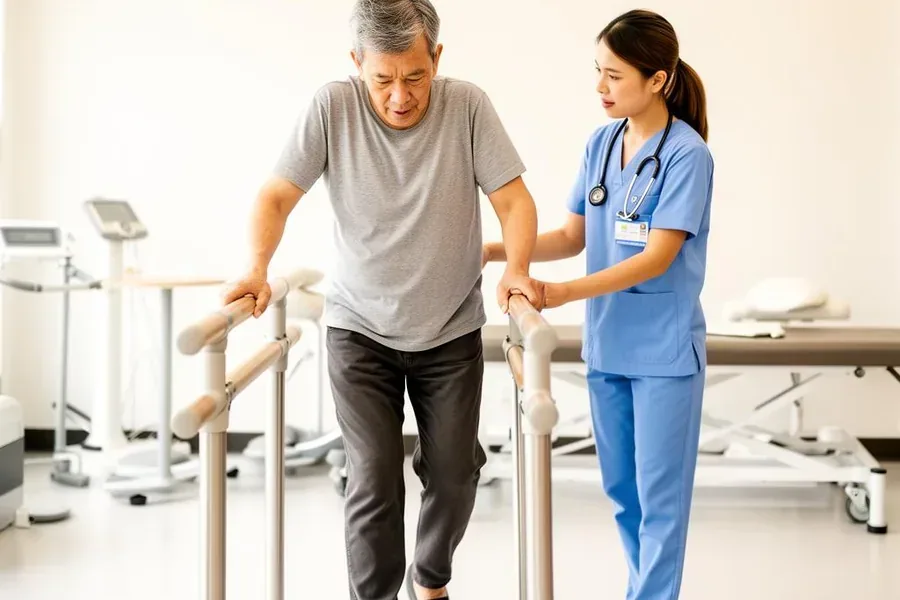
<ul <liGait Training: Progression from parallel bars to walking aids, focusing on weight-bearing, balance, and coordination. This might include treadmill training with body-weight support or advanced robotic exoskeletons.</li <liUpper Extremity Recovery: Constraint-induced movement therapy (CIMT) for appropriate candidates, functional task practice, fine motor skill development, and strengthening exercises.</li <liBalance and Coordination: Advanced exercises to improve both static and dynamic balance, reducing fall risk.</li <liADL Retraining (Occupational Therapy): Intensive practice with activities of daily living such as dressing, eating, bathing, and grooming, often using adaptive equipment initially.</li <liSpeech and Swallowing Therapy (if needed): Targeting dysarthria, apraxia, or dysphagia with specialized exercises and compensatory strategies.</li <liCognitive Rehabilitation: More complex tasks to improve memory, attention, executive function, and problem-solving.</li </ul
Weeks 7-12: Refinement, Endurance, and Community Reintegration
As foundational skills return, the focus shifts to refining movements, building endurance, and preparing for reintegration into daily life.
Therapy concentrates on:
<ul <liAdvanced Gait and Mobility: Walking on uneven surfaces, ascending/descending stairs, navigating obstacles, and increasing walking distance and speed.</li <liDual-Task Training: Performing motor tasks while engaging cognitively (e.g., walking while talking or counting), crucial for real-world scenarios.</li <liVocational/Avocational Rehabilitation (Occupational Therapy): Identifying and adapting tasks related to hobbies, work, or community roles.</li <liDriving Assessment (if appropriate): Preparatory training and consultation for return to driving.</li <liCardiovascular Endurance: Incorporating exercises to improve stamina and reduce fatigue, common post-stroke.</li <liPsychological Support: Continued counseling and support for emotional adjustments, which can significantly impact recovery and quality of life.</li </ul
Beyond 12 Weeks: Sustaining Progress and Long-Term Wellness
While the intensive phase typically yields the most dramatic improvements, recovery is a continuous process. For those staying longer, or returning for follow-up, Sanpiti offers programs focused on:
<ul <liMaintenance Programs: Tailored exercise routines to maintain gains and prevent regression.</li <liCommunity Integration: Practicing skills in real-world settings (e.g., navigating public transport, shopping).</li <liAdaptive Sports & Recreation: Exploring new ways to engage in physical activity and leisure.</li <liOngoing Monitoring: Regular follow-ups with our PM&R physician to manage any evolving secondary complications.</li </ul
Our 87% recovery success rate isn't just a number; it's a testament to the dedication of our team and the resilience of our patients.
Why Sanpiti Rehabilitation Center in Bangkok?
Choosing where to undergo intensive stroke rehab is a significant decision. Here's why international patients choose Sanpiti:
<ul <liEvidence-Based Excellence: Our programs are rooted in the latest scientific research on neuroplasticity and stroke recovery. Kultinee Glinpoon, a Licensed Physical Therapist from Mahidol University, ensures our protocols are aligned with international best practices.</li <liExceptional Success Rate: An 87% recovery success rate speaks volumes about our patient outcomes and the quality of our care.</li <liIntensive Therapy: We offer 2-3 dedicated PT sessions per day, significantly higher than many other centers, maximizing your recovery potential, especially during the crucial Golden Period.</li <liMultidisciplinary Team: Our comprehensive team includes PM&R physicians (like Dr. Korawlai Glinpoon), physical therapists, occupational therapists, speech-language pathologists, and nurses, all working collaboratively.</li <liState-of-the-Art Facilities: Our 9 modern branches across Bangkok are equipped with advanced rehabilitation technology and a comfortable, supportive environment.</li <liCost-Effectiveness: Compared to similar intensive programs in Western countries, rehabilitation at Sanpiti offers world-class care at a significantly more accessible price point, starting from approximately $850 USD per month for basic services, making extended stays feasible.</li <liCultural Immersion & Support: Bangkok offers a rich cultural experience and a welcoming environment for international patients, with readily available amenities and support services.</li <liSeamless Experience: We provide assistance with travel logistics, accommodation, and translation services to ensure a smooth transition for international patients and their families.</li </ul
Actionable Advice for International Patients
If you're considering intensive stroke rehabilitation in Bangkok, here are a few steps to prepare:
<ul <liGather Medical Records: Compile all relevant medical documents, including stroke diagnosis, imaging reports, and previous rehabilitation notes.</li <liDetailed Consultation: Contact Sanpiti for a remote consultation. Provide your medical history so our team can assess suitability and provide a preliminary treatment plan and cost estimate.</li <liVisa & Travel Planning: Research visa requirements for Thailand. Our patient coordinators can offer guidance on travel logistics and finding suitable accommodation near our branches.</li <liSupport System: Identify if a family member or caregiver will accompany you, as their involvement often enhances recovery.</li <liFinancial Planning: Understand the full costs involved, including rehab, accommodation, food, and other living expenses. Our starting price of $850/month for basic services makes Sanpiti an attractive option for longer, more intensive programs.</li </ul
Intensive stroke rehabilitation is a journey of dedication and perseverance. With the right support, expertise, and a commitment to evidence-based practices, significant recovery is not just possible—it's probable. At Sanpiti Rehabilitation Center in Bangkok, we are ready to guide you every step of the way towards regaining independence and a fulfilling life.
Reach out to Sanpiti Rehabilitation Center today to learn more about our intensive stroke rehabilitation programs and begin your recovery journey in the heart of Bangkok.
References
<ul <liPlow, E. B., et al. (2012). 'The 'golden period' of motor rehabilitation after stroke: An analysis of clinical trials over the last 20 years.' Stroke, 43(11), 3042-3047.</li <liVeerbeek, J. M., et al. (2014). 'Body weight‐supported treadmill training for retraining walking after stroke.' Cochrane Database of Systematic Reviews, (11).</li <liAmerican Heart Association/American Stroke Association Guidelines for Adult Stroke Rehabilitation and Recovery. (2016). Stroke, 47(6), e91-e123.</li </ul