Intensive Stroke Rehab Bangkok: Week-by-Week Recovery Timeline
Discover what to expect in intensive stroke rehabilitation in Bangkok, from daily therapy to long-term recovery at Sanpiti Rehabilitation Center.
A stroke can be a life-altering event. The journey to recovery is often long and challenging, but with the right approach, dedication, and intensive rehabilitation, significant gains are possible. For many international patients, Bangkok, Thailand, has emerged as a leading destination for world-class stroke rehabilitation, offering advanced care at a fraction of Western costs. At Sanpiti Rehabilitation Center, we understand the complexities of stroke recovery and are dedicated to guiding our patients through every step. This article provides a week-by-week guide to what you can expect during intensive stroke rehabilitation at a center like Sanpiti, integrating cutting-edge research and our unique approach.
The Core Philosophy: Neuroplasticity and the Golden Period
Our understanding of stroke recovery has been revolutionized by the concept of neuroplasticity – the brain's remarkable ability to reorganize itself by forming new neural connections. This is the bedrock of modern rehabilitation. Intensive, repetitive, and task-specific training, especially during the 'Golden Period' (the first 3-6 months post-stroke), significantly enhances these adaptive changes. The American Heart Association/American Stroke Association (AHA/ASA) guidelines emphasize early and intensive rehabilitation for optimal outcomes (Winstein et al., 2016).
“The 'Golden Period' immediately following a stroke is crucial for maximizing neuroplasticity and recovery potential.”
At Sanpiti Rehabilitation Center, our founders, Kultinee Glinpoon (a Licensed Physical Therapist from Mahidol University) and Dr. Korawlai Glinpoon (a highly respected PM&R Physician), have built our programs around these principles. Our 9 branches across Bangkok ensure accessibility, and our 87% recovery success rate speaks volumes about our commitment to evidence-based, patient-centered care.
Intensive Stroke Rehab Bangkok: The Sanpiti Daily Program
Intensive rehabilitation is not just about therapy; it's about a structured, consistent environment designed for progress. Our typical daily stroke rehabilitation program involves 2-3 dedicated physical therapy (PT) sessions per day, supplemented by occupational therapy (OT), speech therapy (ST), and other modalities as needed. This frequent, focused approach is a cornerstone of effective neurorehabilitation (Langhorne et al., 2011, Cochrane Review).
Here’s a typical flow, subject to individual patient needs and endurance:
Morning: First PT session focusing on global mobility, strengthening, balance, and gait training.
Mid-day: OT session addressing Activities of Daily Living (ADLs) like dressing, eating, hygiene, and fine motor skills.
Afternoon: Second PT session, often more focused on specific impairments or incorporating advanced techniques like robotic-assisted therapy or neuromuscular electrical stimulation (NMES).
Throughout the day: Speech therapy for communication and swallowing difficulties, psychological support, and patient education.
Your Week-by-Week Recovery Timeline at Sanpiti
While every stroke journey is unique, here’s a general timeline for intensive stroke rehab in Bangkok at Sanpiti. This assumes the patient is medically stable and ready for intensive engagement.
Weeks 1-4: The Foundations of Recovery (Early Intensive Phase)
Initial Assessment: Upon arrival, a comprehensive assessment by our PM&R physician, Dr. Korawlai Glinpoon, and lead therapists will establish baseline function, identify specific deficits, and set personalized, measurable goals. This includes neurological, motor, sensory, cognitive, and functional assessments.
Focus Areas:
Mobility: Early mobilization, passive and active-assisted range of motion exercises to prevent stiffness and contractures. Bridging, rolling, sitting balance.
Strength: Gentle strengthening exercises for affected limbs, gradually increasing resistance.
Sensory Retraining: Techniques to raise awareness of sensory deficits (e.g., light touch, proprioception).
Basic ADLs: Instruction on basic self-care, often modified or assisted.
Communication: If required, speech therapy focuses on basic verbal and non-verbal communication, swallowing safety.
Technologies: Early use of biofeedback for muscle activation, functional electrical stimulation (FES) to initiate movement.
Patient and Family Education: Understanding stroke, setting realistic expectations, caregiver training.
Weeks 5-8: Building Independence (Intermediate Intensive Phase)
Progression: As strength and control improve, the focus shifts to more complex movements and functional tasks.
Focus Areas:
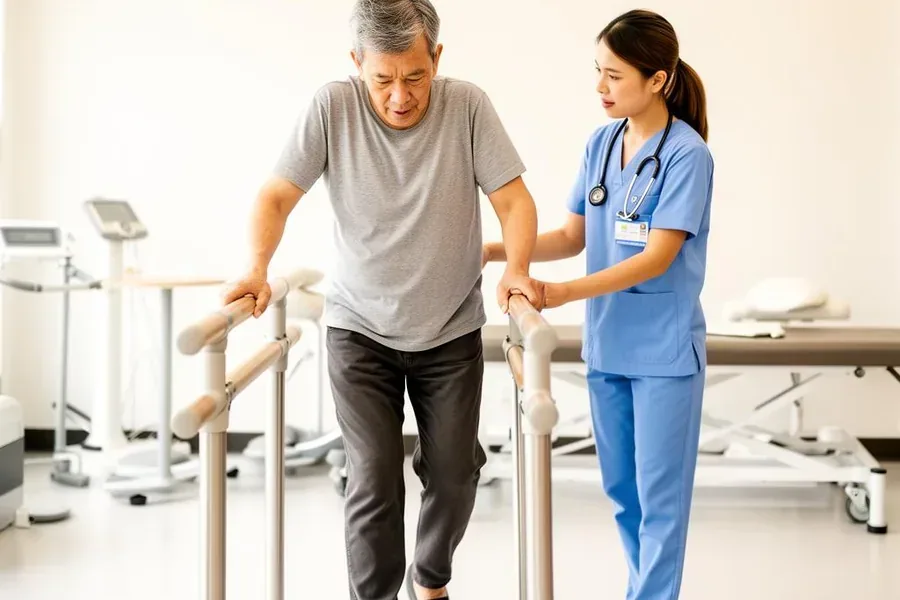
Gait Training: Progression from standing balance to weight-bearing, parallel bar walking, and eventually independent or assisted walking with assistive devices. Repetitive task practice is key here (Morone et al., 2009).
Advanced ADLs: Dressing, showering, grooming, and feeding with less assistance. Incorporating adaptive equipment where necessary.
Upper Extremity Function: Intensive training for hand and arm function, including constraint-induced movement therapy (CIMT) for appropriate candidates (Wolf et al., 2006, JAMA).
Cognitive Retraining: Addressing attention, memory, and problem-solving skills if affected.
Balance and Coordination: Challenging balance exercises, dynamic standing, and multi-directional movements.
Technologies: Robotic gait trainers, virtual reality for engaging and repetitive task practice.
Weeks 9-12+: Towards Community Reintegration (Advanced Intensive Phase)
Optimization and Integration: The goal during this phase is to optimize functional independence and prepare for a safe return to home and community life.
Focus Areas:
Community Ambulation: Navigating stairs, uneven terrain, curbs. Practicing transfers in different environments (e.g., getting into a car).
Instrumental ADLs (IADLs): Cooking, light housekeeping, managing finances, using public transport – tasks that prepare for independent living.
Return to Hobbies/Work: Tailored interventions to help patients resume meaningful activities, including vocational rehabilitation assessments.
Energy Conservation and Fatigue Management: Strategies to manage post-stroke fatigue, a common challenge.
Spasticity Management: Ongoing monitoring and interventions, potentially including stretching, splinting, and medication management in coordination with the physician.
Long-term Exercise Program: Development of a personalized home exercise program for continued progress and maintenance.
Why Choose Sanpiti for Intensive Stroke Rehab in Bangkok?
Choosing where to undergo intensive stroke rehabilitation is a critical decision. Sanpiti Rehabilitation Center offers a compelling package for international patients:
Expertise and Experience: Led by Kultinee Glinpoon and Dr. Korawlai Glinpoon, our team comprises highly skilled and compassionate therapists dedicated to neurorehabilitation. Our 87% recovery success rate is a testament to our expertise.
Intensive Programming: Our commitment to 2-3 PT sessions per day, integrated with OT and ST, significantly maximizes recovery potential, aligned with global best practices.
State-of-the-Art Facilities: With 9 branches strategically located across Bangkok, we provide access to modern equipment and comfortable environments, designed for optimal recovery.
Cost-Effectiveness: While offering world-class care, rehabilitation in Thailand is significantly more affordable than in Western countries. Intensive programs at Sanpiti start from approximately $850/month, making comprehensive care accessible without compromising quality.
Holistic Support: We focus not just on physical recovery but also on the psychological and social well-being of our patients and their families. Our international patient support team assists with everything from accommodation to navigating local culture.
Actionable Advice for International Patients
Research Thoroughly: Look for centers with experienced staff, evidence-based practices, and transparent success rates. Sanpiti prides itself on these qualities.
Prepare Medical Records: Have all medical documents, including imaging reports (CT/MRI), hospital discharge summaries, and a list of medications, translated into English for seamless admission.
Plan for Duration: Understand that stroke recovery is a marathon, not a sprint. Intensive rehabilitation often requires several weeks to months. Discuss expected timelines with our team.
Consider Accommodations: Bangkok offers a wide range of accommodation options near our branches to suit various budgets. Our team can assist with recommendations.
Visa Requirements: Check Thailand's visa requirements for medical tourists from your country well in advance.
Communicate Expectations: Have an open discussion with Sanpiti’s team about your goals and concerns. We offer online consultations to facilitate this.
Conclusion
Intensive stroke rehabilitation in Bangkok at Sanpiti Rehabilitation Center offers a beacon of hope for individuals seeking to regain function and independence after a stroke. Our structured, evidence-based programs, delivered by a dedicated team of experts like Kultinee Glinpoon and Dr. Korawlai Glinpoon, are designed to harness the brain's neuroplasticity and maximize recovery within the crucial Golden Period and beyond. With our 9 branches, high success rate, and cost-effective approach, we are committed to helping you write your unique success story. Contact us today to learn more about how Sanpiti can be your partner in recovery.
References
Langhorne, P., Bernhardt, J., & Kwakkel, G. (2011). Stroke rehabilitation. The Lancet, 377(9778), 1693-1702. (Cochrane Review)
Morone, G., Cicinelli, P., & Mazzeo, N. (2009). The role of experience-dependent plasticity in the recovery of motor function after stroke. Reviews in Neurological Diseases, 6(2), 70-76.
Winstein, C. J., et al. (2016). Guidelines for Adult Stroke Rehabilitation and Recovery: A Guideline for Healthcare Professionals From the American Heart Association/American Stroke Association. Stroke, 47(5), e98-e169.
Wolf, S. L., et al. (2006). Effect of Constraint-Induced Movement Therapy on Upper Extremity Function 3 to 9 Months After Stroke: The EXCITE Randomized Clinical Trial. JAMA, 296(17), 2095-2104.